

Magnesium bisglycinate
KosherMade in Israel
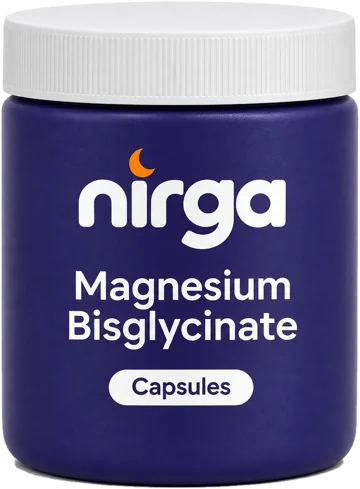
Illustration. Final packaging may differ.
Magnesium bisglycinate
  • Less tirednessand fatigue
  • Musclesnormal function
  • Nervous systemnormal function
  • Gentleon the gut
What to expect, week by week
  1. Day 1You take it in the evening with dinner. Nothing to feel yet, and that is normal.
  2. Weeks 1 to 2Your gut tells you whether the dose suits you. Bisglycinate is the form least likely to upset it.
  3. Weeks 3 to 4The right moment to judge: tiredness, muscle comfort, evenings.
  4. After thatA daily habit. No break is needed as long as you stay under 350 mg a day from supplements.
The numbers that matter
  • 310–420 mgdaily magnesium need of an adult
  • 350 mgsafe upper limit from supplements
  • 300+processes in the body that use magnesium
  • 2 hgap to keep from certain medicines
Source: NIH Office of Dietary Supplements.
Bisglycinate compared with the other forms
BisglycinateCitrateOxide
AbsorptionGoodGoodLow
Gut comfortVery goodLaxative at high dosesLaxative
Suited to evening useYesDepends on the doseNot ideal
PriceHigherModerateLowest
How to take it
  1. In the eveningWith a glass of water, with or after dinner.
  2. Every dayRegularity matters more than the exact hour.
  3. Away from medicinesLeave two hours with antibiotics, thyroid or osteoporosis drugs.
Transparency first
  • The exact doseThe amount of active ingredient per serving, not just the weight of the compound.
  • A lab report for every batchResults will be published on the site, with the batch number.
  • Kosher certificationThe certifying body will be named on the packaging and on this page.
  • Made in IsraelIn a GMP-certified facility.
Coming soon

Magnesium bisglycinate

Bisglycinate is magnesium bound to two molecules of the amino acid glycine. It is well absorbed and gentler on the gut than magnesium oxide or high-dose citrate. It is the form we chose for an evening routine.

  • Contributes to a reduction of tiredness and fatigue
  • Contributes to normal functioning of the nervous system
  • Contributes to normal muscle function
  • Made in Israel, kosher, no unnecessary additives

Bundles planned for launch

Price announced at launch

Join the waitlist

This product launches soon. Leave your email and get 10% off on launch day.

By signing up you agree to receive our launch updates. You can unsubscribe at any time.
Watch the video · 0:45Magnesium bisglycinate in under a minuteWhat magnesium bisglycinate is, how it differs from other forms, how much magnesium you need a day and how to take it.With voice-over
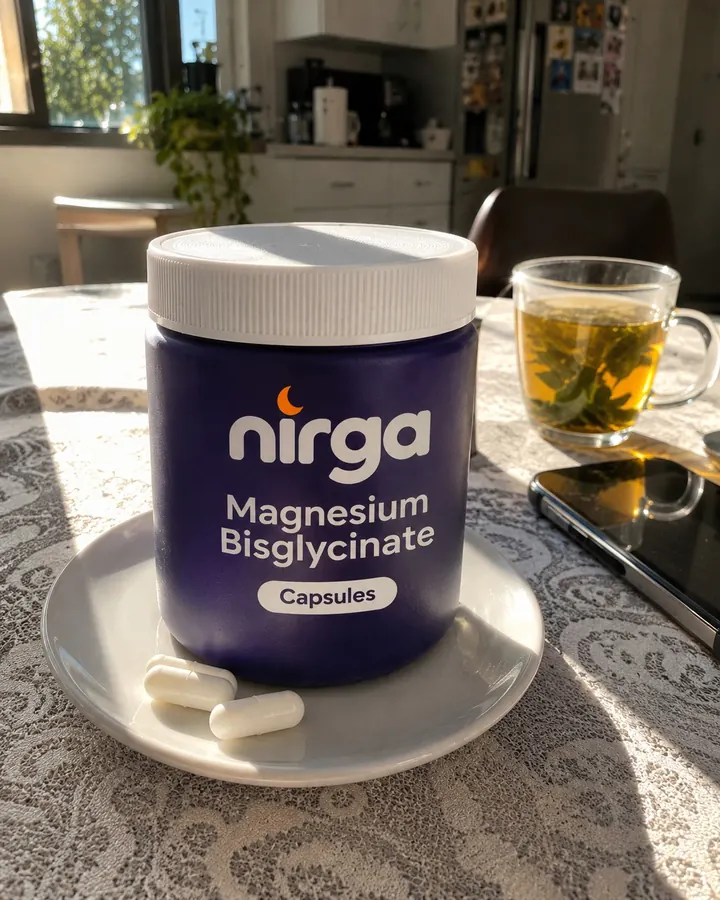
A woman sitting on her bed in the evening, holding a jar of Nirga magnesium bisglycinateA jar of Nirga magnesium bisglycinate on a bedside table at duskA jar of magnesium and two capsules on a kitchen table next to a cup of tea

Illustrative images created with AI. Final packaging may differ.

Does it really work?

It depends on what you expect from it. Here is what the research supports and what it does not.

QuestionWhat is knownLevel of evidence
Correcting an intake that is too lowYes. This is what a magnesium supplement is for.Strong
Tiredness and fatigueMagnesium contributes to reducing them, mostly when intake was insufficient.Established
SleepSome small studies show a modest benefit, mainly in older adults.Limited
CrampsControlled trials have not shown a clear effect.Not shown

What to expect, week by week

Magnesium is a nutrient, not a sedative. Its effect builds as your stores fill.

  1. Day 1

    You take it in the evening with dinner. Nothing to feel yet, and that is normal.

  2. Weeks 1 to 2

    Your gut tells you whether the dose suits you. Bisglycinate is the form least likely to upset it.

  3. Weeks 3 to 4

    The right moment to judge: tiredness, muscle comfort, evenings.

  4. After that

    A daily habit. No break is needed as long as you stay under 350 mg a day from supplements.

The numbers that matter

  • 310–420 mgdaily magnesium need of an adult
  • 350 mgsafe upper limit from supplements
  • 300+processes in the body that use magnesium
  • 2 hgap to keep from certain medicines

Source: NIH Office of Dietary Supplements.

Bisglycinate compared with the other forms

The form changes absorption and comfort more than the brand does.

CriterionBisglycinateOur choiceCitrateOxide
AbsorptionGoodGoodLow
Gut comfortVery goodLaxative at high dosesLaxative
Suited to evening useYesDepends on the doseNot ideal
PriceHigherModerateLowest

How to take it

  1. In the evening

    With a glass of water, with or after dinner.

  2. Every day

    Regularity matters more than the exact hour.

  3. Away from medicines

    Leave two hours with antibiotics, thyroid or osteoporosis drugs.

Who it is for

  • Adults whose diet is low in nuts, legumes, whole grains and green vegetables
  • People who train often
  • Those who found citrate or oxide hard on the gut

Ask a doctor first

  • Kidney disease
  • Pregnancy or breastfeeding
  • Ongoing medication

Do I need to take breaks?

No. Magnesium is a nutrient the body uses every day. What matters is staying under 350 mg a day from supplements.

Transparency first

What we commit to publishing with the first batch.

  • The exact doseThe amount of active ingredient per serving, not just the weight of the compound.
  • A lab report for every batchResults will be published on the site, with the batch number.
  • Kosher certificationThe certifying body will be named on the packaging and on this page.
  • Made in IsraelIn a GMP-certified facility.

Join the waitlist

Sources : NIH Office of Dietary Supplements – Magnesium, Fact Sheet for Health Professionals

What is in the formula

A plant-based capsule, magnesium in bisglycinate form, and nothing unnecessary. The exact amount per capsule and the suggested daily serving will be published here with the lab report for the first batch.

Why this form

Magnesium is sold in about ten different forms. They do not deliver the same amount of magnesium and are not tolerated the same way. Our guide to choosing a magnesium covers them all, and the bisglycinate vs citrate comparison explains the difference between the two most searched forms.

In practice, day to day

In the evening, with a glass of water, with or after a meal. If you take medication, leave at least two hours between the two. For the link between magnesium and sleep, see magnesium and sleep.

Questions people ask before buying bisglycinate

How much magnesium is really in a capsule?

Magnesium bisglycinate is mostly glycine by weight. A fully chelated powder holds roughly 10 to 14% magnesium, so a capsule filled with 500 mg of bisglycinate gives about 50 to 70 mg of magnesium. That is why a daily serving is several capsules, and why a label announcing far more per capsule deserves a second look: it is usually blended with oxide.

Fully chelated or buffered: how to tell

What the ingredient list says What it means
Magnesium bisglycinate only Fully chelated
Magnesium bisglycinate, magnesium oxide Buffered: part of the magnesium comes from oxide
“Magnesium bisglycinate chelate buffered” Buffered, stated openly
“Magnesium complex” or “blend” without amounts You cannot tell; ask the brand

Buffered products are not dangerous. They simply lose part of what you pay for in a bisglycinate: the gentleness on the gut.

Capsule, tablet or powder?

Format For Against
Capsule No taste, few additives, easy to split the dose Several a day
Tablet Compact Needs binders and coatings
Powder Dose is easy to adjust Taste, needs measuring

What happens in the first days

Most people notice nothing dramatic, and that is normal. Magnesium is not a sedative. What is reasonable to watch over three to four weeks: how easily you fall asleep, night cramps, and how your gut reacts. If stools become loose, lower the serving or split it between two meals.

Can I take it all year?

Within the 350 mg limit from supplements, long-term use is considered safe for healthy adults. It makes sense to reassess from time to time: if your diet has changed, or if you see no difference when you stop for two weeks, you may not need it.

How to store it

Closed, dry, away from heat. A bathroom or a shelf above the stove is the wrong place in an Israeli summer. Capsules that have clumped or changed smell should be replaced.

What we will publish at launch

  • The exact elemental magnesium per capsule and per serving.
  • The full ingredient list, including the capsule.
  • The manufacturer and its GMP certification.
  • The kosher certifying body.
  • A lab report per batch.

Until those are confirmed, we would rather leave a line blank than print a number we cannot prove.

To see what the brands on Israeli shelves actually state on their labels, form by form, read our comparison of magnesium brands in Israel.

Our commitments

  • Local manufacturing in a GMP-certified Israeli facility.
  • A lab report for every batch, published on the site.
  • A clear label: the amount of elemental magnesium is stated, not just the weight of the compound.

Frequently asked questions

When will the product be available?

The first batch is in preparation. People on the waitlist hear first and get 10% off on launch day.

Why bisglycinate rather than citrate?

Both are well absorbed. Bisglycinate causes digestive upset less often, which makes it more comfortable for daily use, especially in the evening.

Is the product kosher?

Yes. The certifying body will be stated on the packaging and on this page with the first batch.

Who should check with a doctor first?

People with kidney disease, anyone pregnant or breastfeeding, and people taking medication, especially antibiotics, thyroid medication or osteoporosis drugs.

How much magnesium is in a bisglycinate capsule?

A fully chelated bisglycinate holds roughly 10 to 14% magnesium, so a 500 mg capsule gives about 50 to 70 mg of magnesium. A much higher figure usually means it is blended with oxide.

How do I know if a bisglycinate is buffered?

Read the ingredient list. If magnesium oxide appears next to the bisglycinate, the product is buffered.

Can magnesium bisglycinate be taken all year?

Within the 350 mg limit from supplements, long-term use is considered safe for healthy adults. Reassess from time to time whether you still need it.

Updated

Magnesium bisglycinateNotify me at launch