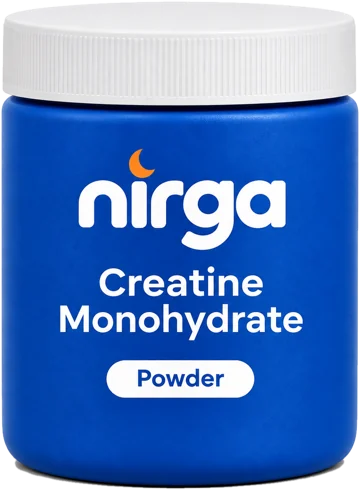
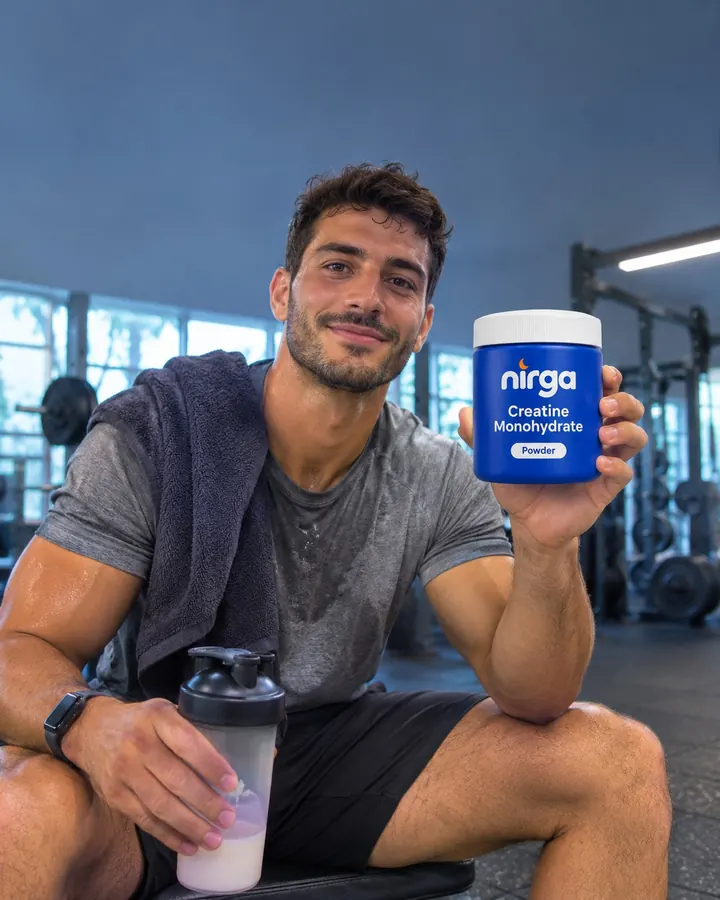

What is in the tub
Creatine monohydrate, and nothing else. No sweeteners, flavors or fillers. The origin of the raw material and the lab report will be published here with the first batch.
In practice, day to day
3 to 5 g a day, dissolved in a glass of water or another drink, at whatever time suits you, rest days included. Dosage, loading and safety are covered in the creatine guide.
Who benefits most
People who do strength training or short, intense effort, women and men alike. With kidney disease, pregnancy, breastfeeding, or under 18: only on medical advice.
Questions people ask before buying creatine
Powder or capsules?
| Format | For | Against |
|---|---|---|
| Powder | Lowest price per gram, one scoop covers the day | Needs a glass of water |
| Capsules | Easy to carry | Several capsules to reach 3 g, higher price |
A daily serving of 3 to 5 g is a lot to fit into capsules. That is why powder remains the standard.
Scoop or grams?
A scoop measures volume, not weight, and creatine powders do not all have the same density. The label states how many grams a level scoop holds. If you want to be exact, weigh one scoop on a kitchen scale once and you will know for good.
How to mix it
Creatine monohydrate dissolves slowly in cold water. Stir it into a full glass, wait a minute, stir again. It dissolves faster in lukewarm water. A little powder at the bottom of the glass is not a quality defect. Drink it soon after mixing rather than leaving it for hours.
Does it have to be taken at a set time?
No. What raises the stores in the muscle is the daily repetition, on training days and rest days alike. Choose the moment you will not forget: with breakfast, or in the drink after training.
What “pure” should mean
| What to look for | Why |
|---|---|
| A single ingredient: creatine monohydrate | No sweetener, colouring or blend is needed |
| A lab report for the batch | It shows the creatine content and the checks for contaminants |
| Manufacturing by-products tested | Poorly controlled production can leave traces of unwanted compounds |
| Heavy metals tested | Standard for any powder taken daily |
Loading or not?
| Approach | Serving | Stores are full after |
|---|---|---|
| With loading | About 20 g a day in four servings for 5 to 7 days, then 3 to 5 g | About one week |
| Without loading | 3 to 5 g a day | About four weeks |
Both arrive at the same place. Loading is faster and more likely to upset the stomach.
Weight on the scale
The one or two kilos sometimes seen in the first weeks are mostly water drawn into the muscle. It is not fat, and it is part of how creatine works.
How to store it
In its closed tub, dry, away from heat. Humidity makes the powder clump. Clumps that crumble between the fingers are harmless.
What we will publish at launch
- Grams of creatine monohydrate per scoop.
- The manufacturer and its GMP certification.
- The kosher certifying body.
- A lab report per batch.
Pairs well with
Many people who train also take magnesium bisglycinate, which contributes to normal muscle function.
Frequently asked questions
When will the product be available?
The first batch is in preparation. People on the waitlist hear first and get 10% off on launch day.
How long does a tub last?
The size will be announced at launch. At 3 to 5 g a day, 300 g lasts two to three months.
Do I need a loading phase?
No. Taking 3 to 5 g a day fills your stores in three to four weeks.
Is creatine powder better than capsules?
The creatine is the same. Powder costs less per gram and one scoop covers the day, whereas reaching 3 to 5 g takes several capsules.
Why does creatine not dissolve completely?
Creatine monohydrate dissolves slowly in cold water. Use a full glass, stir twice, or use lukewarm water. A little powder at the bottom is not a defect.